AI Thinkers·CEO, Google DeepMind; 2024 Nobel Laureate
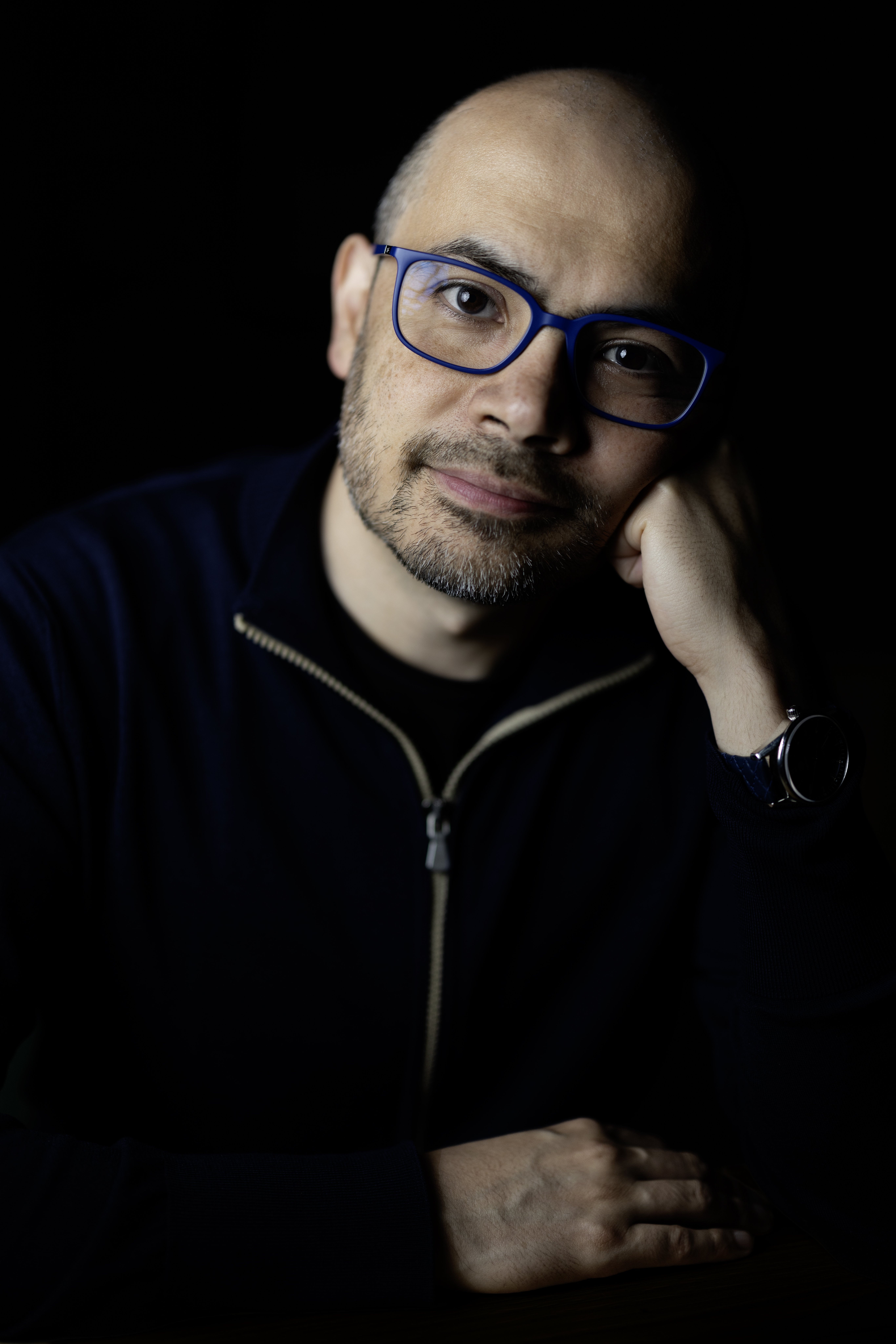
Demis Hassabis
Intelligence is a scientific problem before it is an engineering one. DeepMind was founded to "solve intelligence, and then use that to solve everything else." AlphaFold was the first major vindication: an AI system that cracked a 50-year-old grand challenge in biology. His current bet is that AI is entering a new phase — from passive systems that summarise information to agentic systems that understand the cause-and-effect of the universe — and that this will trigger a golden age of scientific discovery within a decade.
Key positions
AlphaFold is a biology milestone more than an AI milestone — the right measure is solved grand challenges, not benchmark scores.
AlphaFold 2 predicted the 3D structure of virtually all ~200 million known proteins, solving a problem that stumped structural biology for 50 years. Error margin less than the width of an atom, competitive with experimental methods. Made freely available — 2M+ researchers across 190 countries. "I hope we'll look back on AlphaFold as the first proof point of AI's incredible potential to accelerate scientific discovery."
Nobel Prize statement, October 2024 (deepmind.google/blog/demis-hassabis-john-jumper-awarded-nobel-prize-in-chemistry/)
Neuroscience is the right blueprint for AGI.
Hassabis returned to academia for a cognitive neuroscience PhD at UCL (2009) specifically to inform his AI work. His doctoral research established that hippocampal damage impairs both memory and imagination — demonstrating that memory reconstruction and future simulation share neural machinery. "The brain is an existence proof that general intelligence is possible at all." This insight directly influenced experience replay, attention mechanisms, and RL from self-play.
Dwarkesh Patel podcast; UCL profile (ucl.ac.uk)
LLMs alone will not produce AGI — world models and automated experimentation are missing.
Current LLMs "lack genuine transfer learning." His two requirements for AGI: (1) world models — AI that "truly understands physics and space," and (2) automated experimentation — AI that can "solve fundamental problems such as materials and fusion through hands-on work." This is a more demanding standard than OpenAI's benchmark-focused AGI definition.
Dwarkesh Patel podcast; DEV Community summary of Hassabis predictions
AGI is 5–10 years away — but the bar should be scientific creativity, not economic task performance.
He placed the AGI timeframe at "5 to 10 years" in multiple 2025 interviews. He is explicit that his definition differs from OpenAI's: OpenAI defines AGI as performing most economically valuable tasks; Hassabis defines it as a system that can "not only solve existing problems, but also come up with entirely new explanations for the universe." At the All-In Summit: "that will usher in a new golden era of science, so a kind of new renaissance."
All-In Summit transcript (singjupost.com); India AI Impact Summit, April 2026; Axios, December 2025
Safety and capability are not in tension — integrate them from the beginning, not as retrofit.
Hassabis incorporated safety into DeepMind's founding mission in 2010. He signed the 2023 statement declaring AI extinction risk "a global priority alongside pandemics and nuclear war." His practical position: a global pause is impractical to enforce, so the work must be on evaluation frameworks measuring both capabilities and controllability before deployment. "We should not do 'move fast and break things' with these kinds of technologies."
Dwarkesh Patel podcast; TED interview transcript (ted.com)
AI will accelerate science faster than any previous technology — and that is its highest-value application.
"It will be 10 times bigger than the Industrial Revolution, and maybe 10 times faster." His vision is not consumer AI or productivity software — it is AI that does science: models cells, simulates the emergence of life, proposes conjectures. Isomorphic Labs operationalises this: pure AI-driven drug design with a goal of cutting drug design iterations from 20 to 2–3.
The Guardian, August 2025; Isomorphic Labs founding statement (isomorphiclabs.com); Fortune, January 2026
In their own words
“I hope we'll look back on AlphaFold as the first proof point of AI's incredible potential to accelerate scientific discovery.”
“The brain is an existence proof that general intelligence is possible at all.”
“If we will have AGI in the next 10 years...that will usher in a new golden era of science, so a kind of new renaissance.”
“It will be 10 times bigger than the Industrial Revolution, and maybe 10 times faster.”
Tensions with other thinkers
Where this view genuinely conflicts with others in the field.
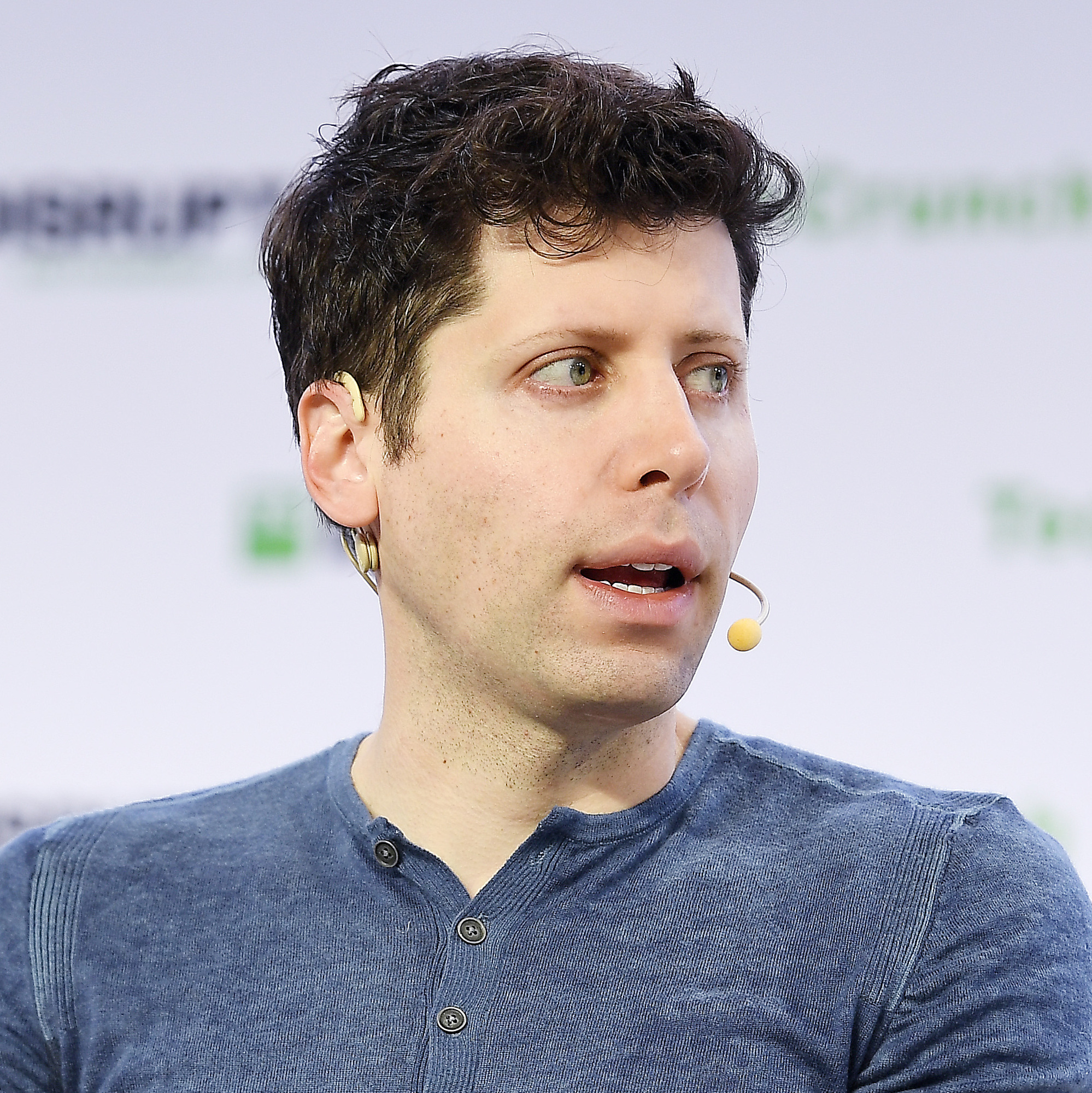
Hassabis requires scientific creativity; Altman requires economic task performance. Different research priorities follow from this.
Hassabis argues LLMs alone will not produce AGI and world models + experimental loops are required — implying a ceiling for the current scaling trajectory.
Hassabis's approach sits between OpenAI's closed default and Meta's open-weight default — open for science, guarded for dangerous capabilities.